Used Reach Stacker Prices 2026: What to Pay by Brand, Age & Condition
Used reach stacker prices are not publicly listed in any index, which means buyers of this port equipment often overpay or walk away from fair deals out of uncertainty. This guide presents realistic 2026 market pricing based on equipment traded through European, Asian, and Middle Eastern markets — with context on what drives value up or down.
Price Table by Brand and Age
The figures below reflect asking prices for machines in serviceable condition with documented maintenance history. Machines without service records or in poor condition should be discounted 20–35% from these figures. Prices are in EUR and include the machine only — transport is additional.
| Brand / Model | Age: 0–5 years | Age: 5–10 years | Age: 10–15 years | Age: 15+ years |
|---|---|---|---|---|
| Kalmar DRF 450 | €650k – €950k | €380k – €620k | €180k – €320k | €60k – €140k |
| Konecranes SMV 4531 | €600k – €880k | €340k – €560k | €160k – €290k | €55k – €120k |
| Hyster RS45 | €520k – €780k | €280k – €480k | €130k – €250k | €45k – €110k |
| CVS Ferrari | €480k – €720k | €250k – €420k | €110k – €230k | €40k – €100k |
These ranges assume: spreader included, tyres with at least 40% remaining tread, engine in working condition, and all safety systems functional. If the spreader is missing, deduct €25,000–€60,000 depending on type.
What Factors Drive Price Up or Down
Operating Hours
Hours matter more than age for reach stackers. A 10-year-old machine with 8,000 hours in light-duty service can be worth more than a 7-year-old machine with 22,000 hours in a high-throughput container terminal. The industry benchmark for "moderate use" is roughly 1,500–2,000 hours per year. Anything above 2,500 hours/year should prompt closer inspection of engine, transmission, and boom wear.
Brand Premium: Kalmar vs the Market
Kalmar commands the strongest residual values in the reach stacker segment, followed closely by Konecranes (SMV). The Kalmar premium is typically 10–20% over comparable Konecranes machines and 20–35% over Hyster or CVS Ferrari at the same age and hours. This premium exists for three reasons: the size of the Kalmar dealer network, parts availability, and the brand's dominant presence in major terminal operator fleets (which creates familiarity and preference for used Kalmar equipment).
Market Region
Prices differ significantly by geography. European used reach stackers typically trade at the highest prices due to stricter maintenance standards, documentation culture, and proximity to major ports. Middle Eastern markets tend to be 10–15% below European levels. Southeast Asian markets vary widely — Singapore and Malaysia prices approach European levels, while South Asian markets are 25–40% below European averages. African buyers typically purchase equipment that European terminals consider end-of-life, at prices reflecting that status.
Spreader Included or Not
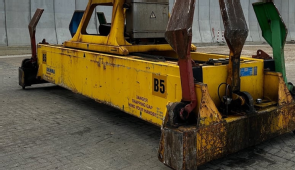
Whether the spreader is included in the sale is a significant value driver. A Kalmar or Elme telescopic reach stacker spreader in good condition adds €25,000–€60,000 to the transaction value. Spreaders without current structural certificates may add less value despite their physical presence.
Emissions Standard (Tier/Stage)
EU Stage V and US EPA Tier 4 Final compliant machines carry a meaningful premium in markets where emissions regulations apply. A Stage V Kalmar DRF from 2022 will trade well above a 2016 Stage III machine of the same model in any EU port. In markets with no emissions requirements, this premium largely disappears.
Transport Costs
Transport is a significant add-on that buyers sometimes underestimate. Indicative costs for road and sea transport of a used reach stacker:
- Intra-European road transport (500–1,500 km): €8,000 – €18,000
- European port to Middle East (sea freight + handling): €15,000 – €28,000
- Europe to West Africa: €18,000 – €30,000
- Europe to Southeast Asia: €20,000 – €35,000
- Europe to South America: €22,000 – €38,000
All figures assume the machine is transported upright on a roll-on/roll-off (RoRo) vessel or flat-rack container. Some older or overheight machines require heavy-lift vessel transport, which can push costs to €50,000+.
What Drives Price Spikes: Terminal Closures and Fleet Sales
The used reach stacker market is not a smooth, liquid market. Prices are influenced by sudden supply events that can create short windows of opportunity for buyers — or price spikes for those who wait.
Terminal closures: When a terminal closes or significantly downsizes, it often releases an entire fleet of equipment into the market within a short timeframe. This temporarily increases supply and creates buyer leverage. Terminals that have closed in recent years have released 8–20 reach stackers at once, pushing transaction prices down 15–25% below normal market levels for 3–6 months.
Operator fleet standardisation: Large terminal operators (MSC, COSCO, APM Terminals, Hutchison) periodically standardise their fleets, selling off non-preferred brands. These fleet sales are price-effective for buyers seeking that specific brand at scale.
New equipment delivery backlogs: When lead times for new reach stackers extend beyond 18–24 months (as occurred in 2021–2023), used equipment prices spike because buyers cannot get new machines fast enough. Lead times have moderated in 2025–2026, which has taken some pressure off used prices.
Pricing a used reach stacker well means treating it as port equipment with a clear total cost of ownership, not just a sticker price. For current listings, browse used reach stackers on Portneeds. For more detail on what to look for when buying, see our FAQ on used reach stacker cost, our used reach stacker buying guide, and our Kalmar vs Konecranes reach stacker comparison.